A new book by Glenn Fleishman

Flong Time,
No See

Forgotten stories of the people and technology behind printing

Back This Project on Kickstarter

Launched on Kickstarter on February 24, 2026!

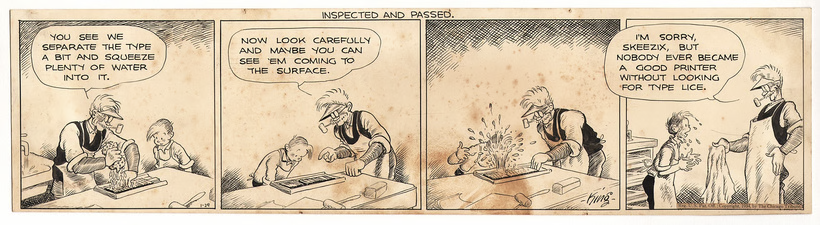
Why did typesetters get paid to compose metal type and then throw it away? How did one New York Times printer stay employed for over 50 years on a “job for life”? Why did newspapers print up to 10 editions a day? Why do we use > as a mark of quotation online? How could you avoid an infestation of type lice in your metal type drawers?

What—what I ask you!—does flong mean?!

The answer to these, and many other questions you never knew you had about the history of printing, will be found in Flong Time, No See. This book brings together work I’ve researched and published over the last seven years, which I will revise and expand for this publication. These are stories about how we made and shared the written word—and what we lost along the way.

While the constant thrum of technological change plays a key, demanding role in these stories, working people stand at the center. The history of printing is the history of labor, and I identify many unsung people to celebrate their professions.
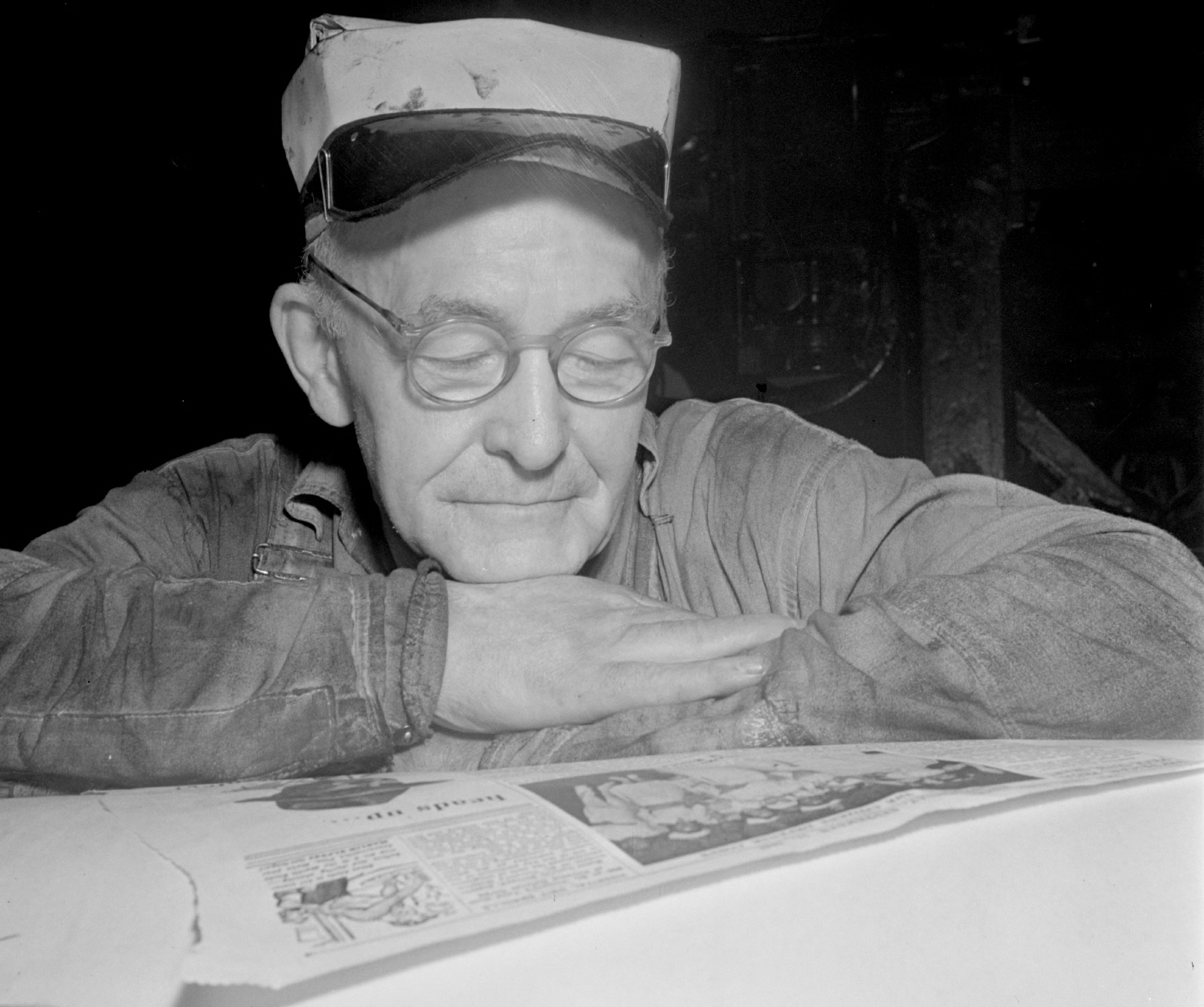
A pressman resting between editions at the New York Times in 1942, leaning on a printed page with glasses pushed up on his cap
Pressman resting between editions at the New York Times, 1942 (photo: Marjory Collins)

The stories included are:

A Gasoline Alley comic strip about type lice being coaxed out of a type case
Type lice had to be coaxed out (Gasoline Alley)
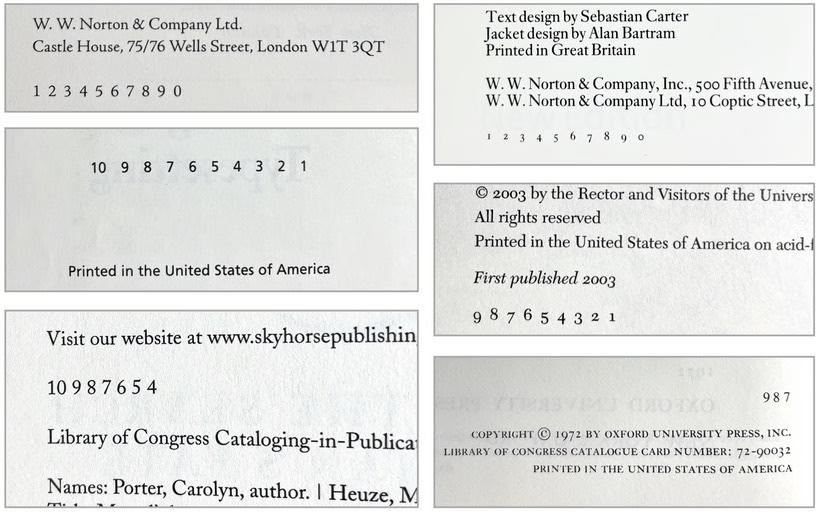
Examples of printing numbering and edition marks found in books
Examples of printing numbering included in books
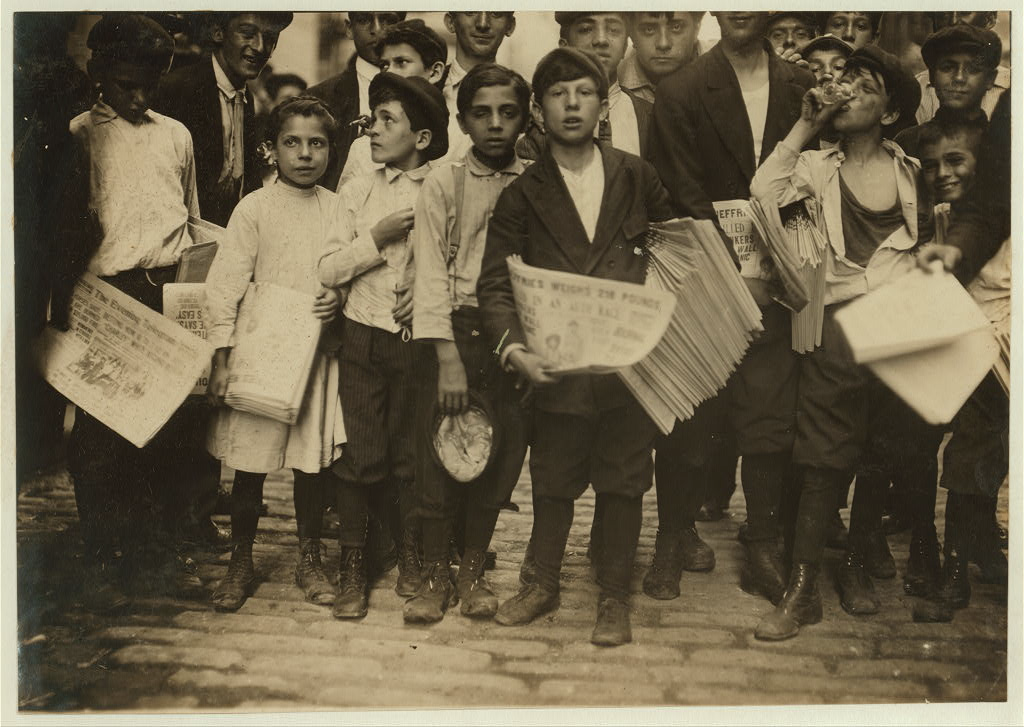
Newsboys and a newsgirl getting afternoon papers on Park Row, New York, July 1910
Newsboys and newsgirl getting afternoon papers, Park Row, New York (Lewis Hines, July 1910)

(This list of stories may expand or change slightly during development.)

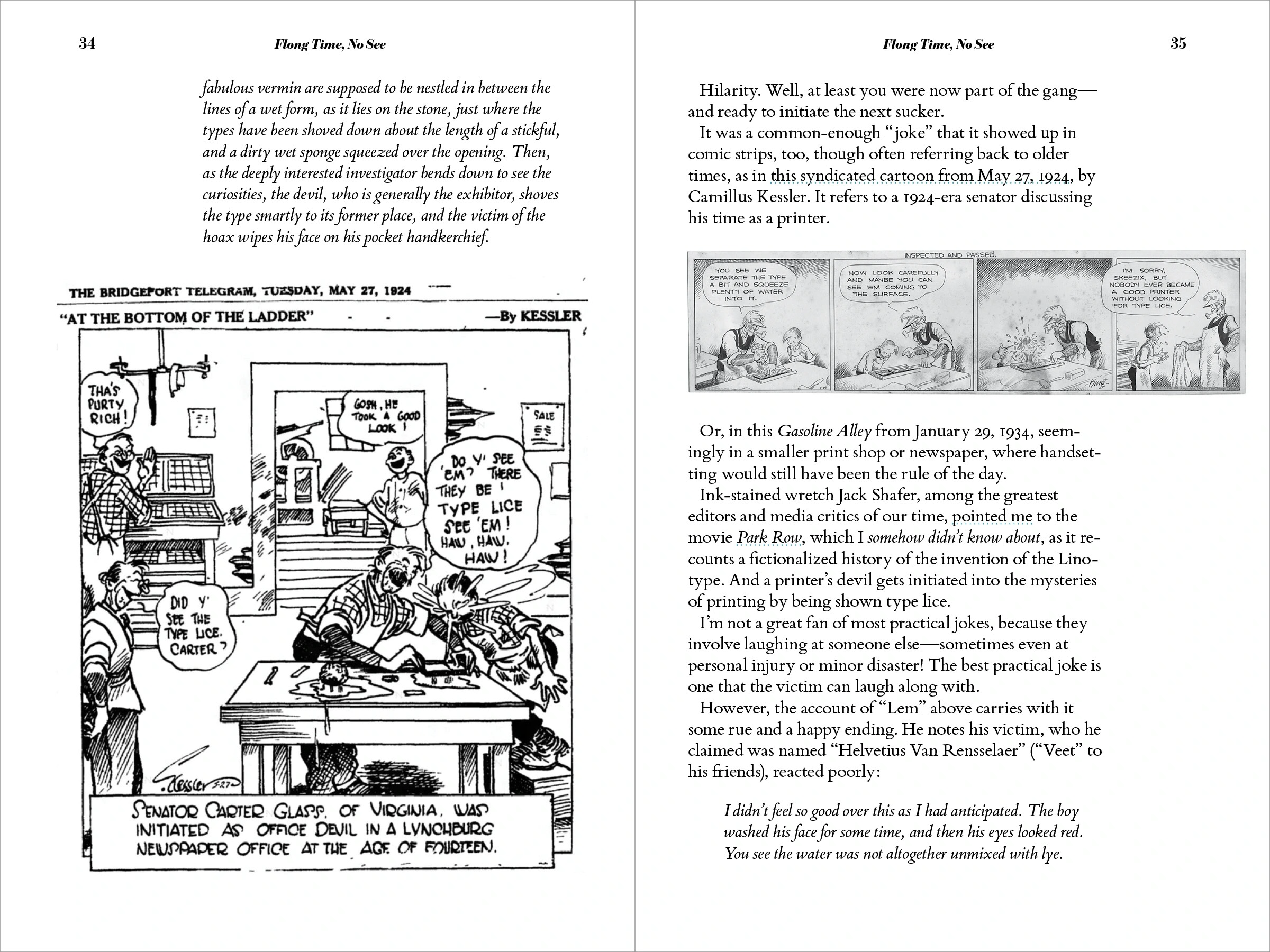
Double-page spread from Flong Time No See showing the chapter on mythical type lice, with a 1924 cartoon and Gasoline Alley comic strip
Preview of double-page spread in “Flong Time, No See,” from the chapter on the mythical type lice
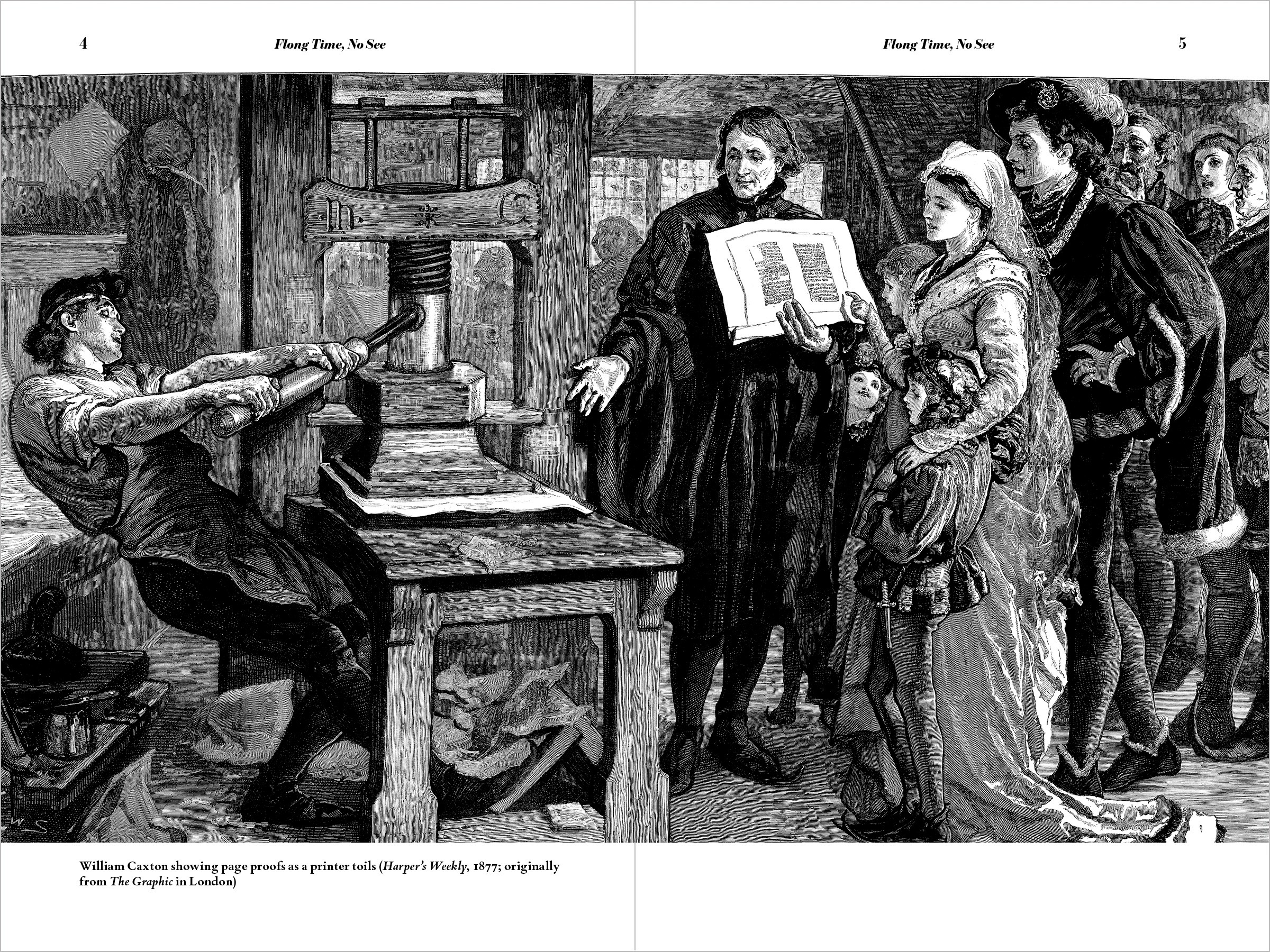
Double-page spread from Flong Time No See reproducing a detailed wood cut from The Graphic, 1877, showing William Caxton at his printing press
Preview of double-page spread in “Flong Time, No See,” reproducing a wood cut from “The Graphic” (1877)

The printed edition will be a 352-page paperback in 6×9-inch format (15×23 cm) with a full-color cover and a black-and-white interior. I’ll also make a DRM-free ebook version.

I need your help to make this book! Backing this project lets me research, revise, and expand the articles; pay for editing, proofreading, and an index; license images and take new photos or commission them; design and produce the book; and print in North America, where I can supervise production and arrange for distribution worldwide. I’d love to share these stories with you.

Print and ebook editions of Flong Time, No See will ship in September 2026. Other items will ship on schedules noted in reward tiers and for add-ons.


What the heck is flong?
Why is it in the title?

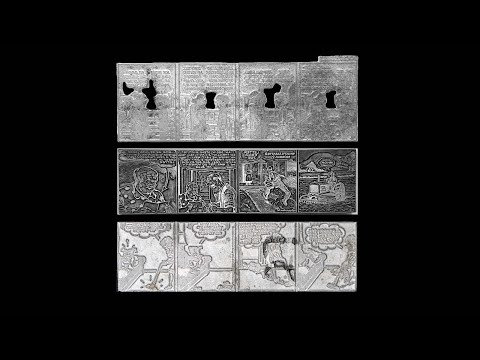
Flong became my favorite word in 2017 and has remained so every year since. I encountered the term researching how cartoons were syndicated in the era of metal printing, and how newspapers improved their volume of printing by shifting from flat plates to curved ones. Etching metal plates for cartoons was expensive and time-consuming. And how could you wrap a flat page of type around a cylinder? Flong was the answer.

A flong was a flexible, paper-based material that could be pushed under force onto metal type, wood headlines, photographs, cartoons, and illustrations, and then used as a mold to produce a nearly exact duplicate of the original using a liquid lead alloy, commonly used in that era.

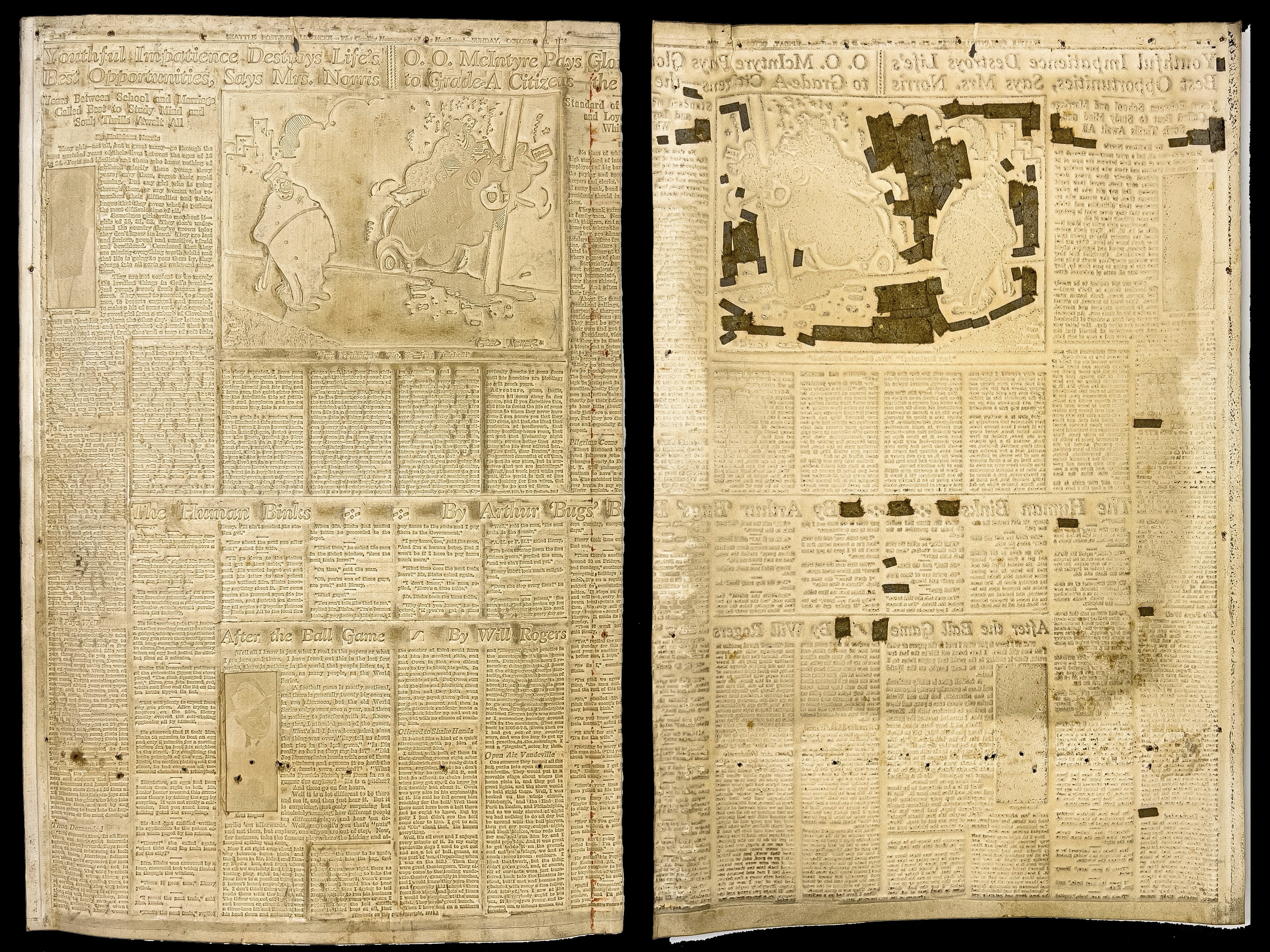
Front and back of a full-page newspaper flong, showing the impressed text and images on the front and felt backing on the reverse
Front and back of a full-page newspaper flong made through direct contact with great pressure between the flong and the metal form of headlines, photos, body text, and a cartoon. Left: Front of flong; right, back, with felt to build up empty areas, which helped produce a better cast plate.

Because it was flexible, a flong could be bent into a semi-cylindrical shape to be molded into a round plate, which was then clamped onto a newspaper printing press. And because it was easy (and cheap) to mass produce, a cartoon syndicate could make hundreds or thousands of flongs from one zinc plate, etched from a photographic negative of the original artwork, and then send those flongs to newspapers around the United States or world.

As part of this campaign, you can even obtain historic and re-created flong! Read on!

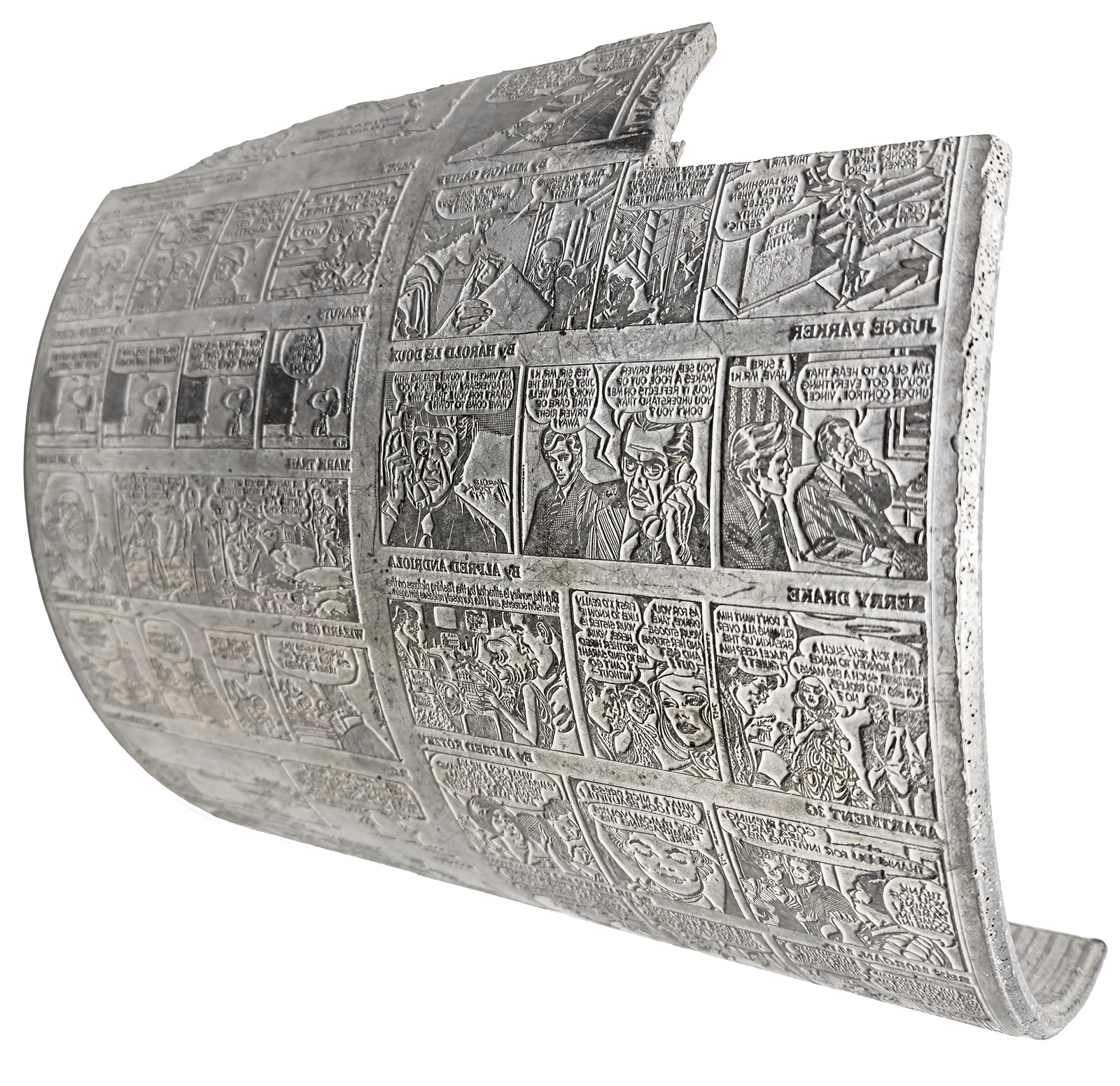
A semi-cylindrical metal printing plate from a 1970s newspaper, showing comic strip panels cast in lead alloy
A semi-cylindrical metal printing plate used on a newspaper in the 1970s to print one of the daily comics pages

Reward tiers

The book is available in print and ebook editions, with a few reward tiers available:

You can also add more copies of the print edition to any pledge with shipping items.

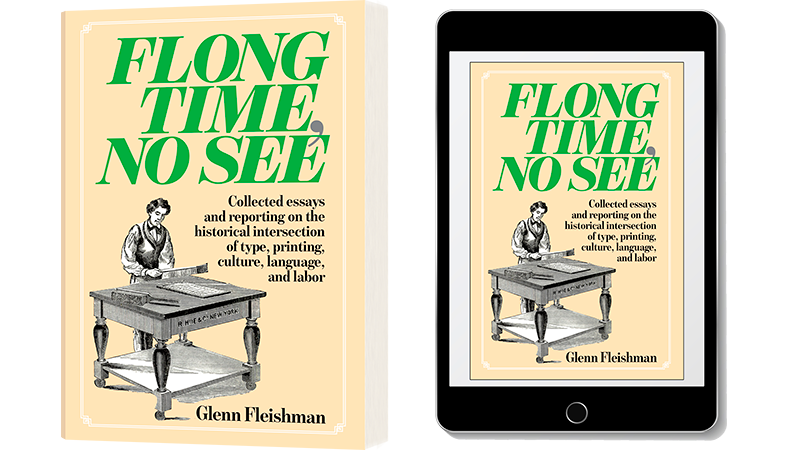
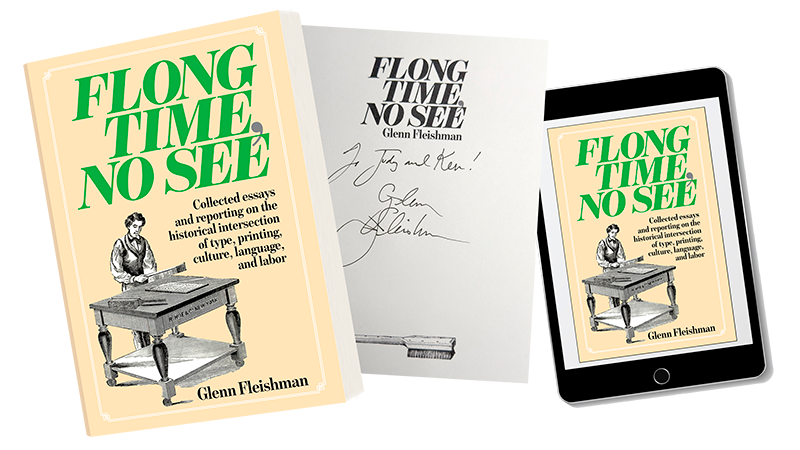
Flong Time, No See shown as a printed paperback alongside an ebook on a tablet
Print and ebook editions of “Flong Time, No See”
Flong Time, No See printed book with a signed and inscribed title page, alongside an ebook on a tablet
Signed/inscribed print edition with ebook

Underwriting tier: thanks, books, and Peanuts flong

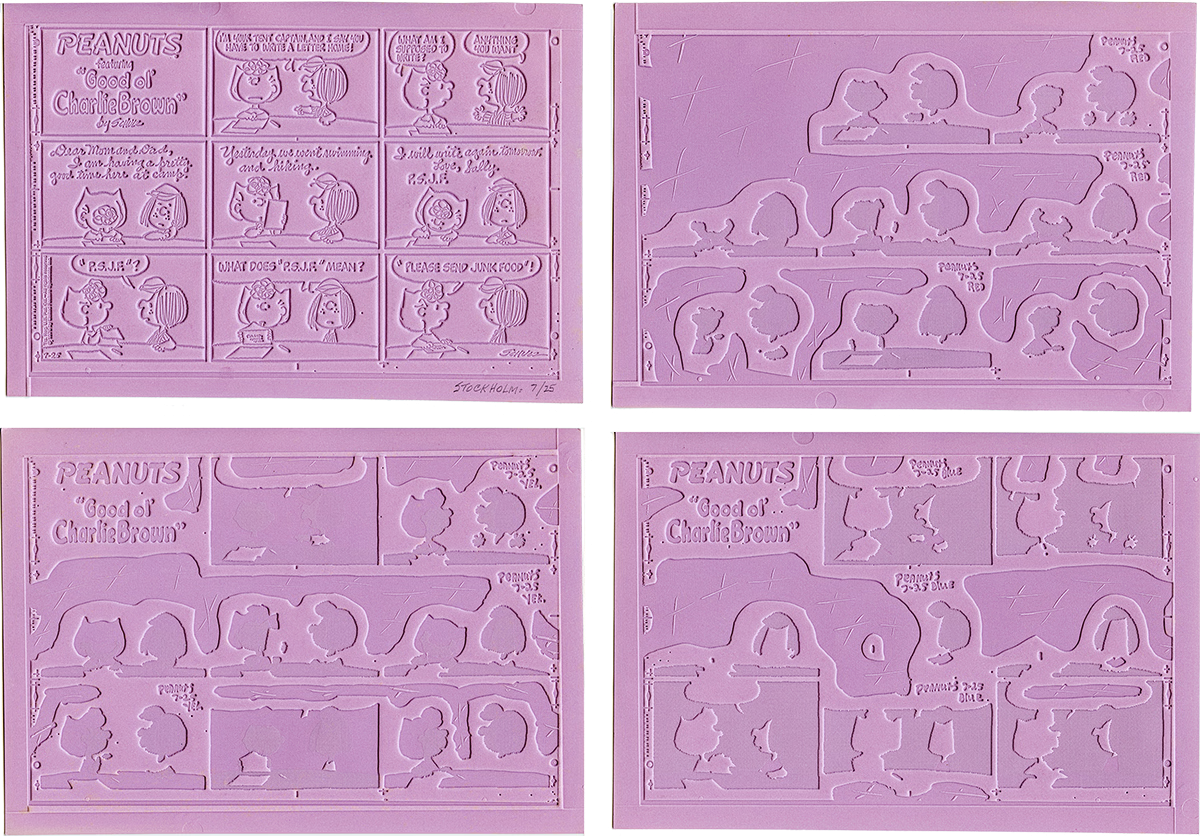
For those who would love to help bring this book into existence and receive a historical printing artifact, the underwriting tier couples my thanks in the print and ebook editions with a rare four-piece set of 1970s Peanuts flong for a Sunday comic—one piece for each of the four process colors used to create the full-color newspaper piece. Only four sets remain from the original cache I acquired. The flongs are accompanied by a small booklet with additional background.

You’ll also receive three bundles of print/ebook editions, signed and inscribed.

Four purple-toned flong plates for a four-color Sunday Peanuts strip, each showing the same comic in different color separations
Four pieces of flong for a four-color Sunday “Peanuts” strip from the 1970s (example shown; the four sets are all different Sunday installments of “Peanuts”)

Exciting book and artifact add-ons

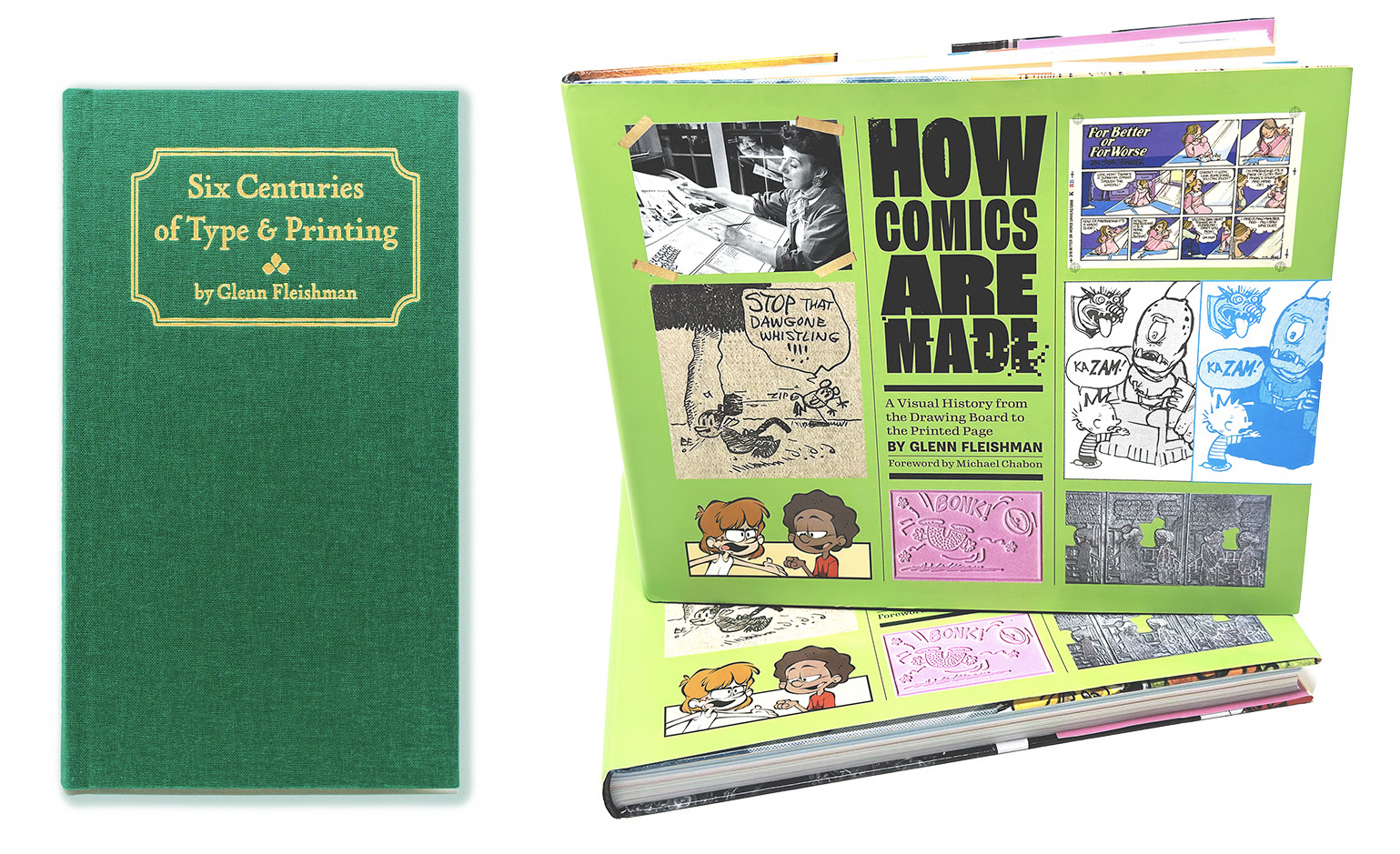
Add-ons in this project include two of my previous books covering related topics:

Two books: Six Centuries of Type and Printing in green cloth binding, and How Comics Are Made with colorful comic art cover
Add-ons include regular and signed copies of “Six Centuries of Type & Printing” and “How Comics Are Made”

As well as the above, I have printing-related artifacts collected and commissioned over the last few years:

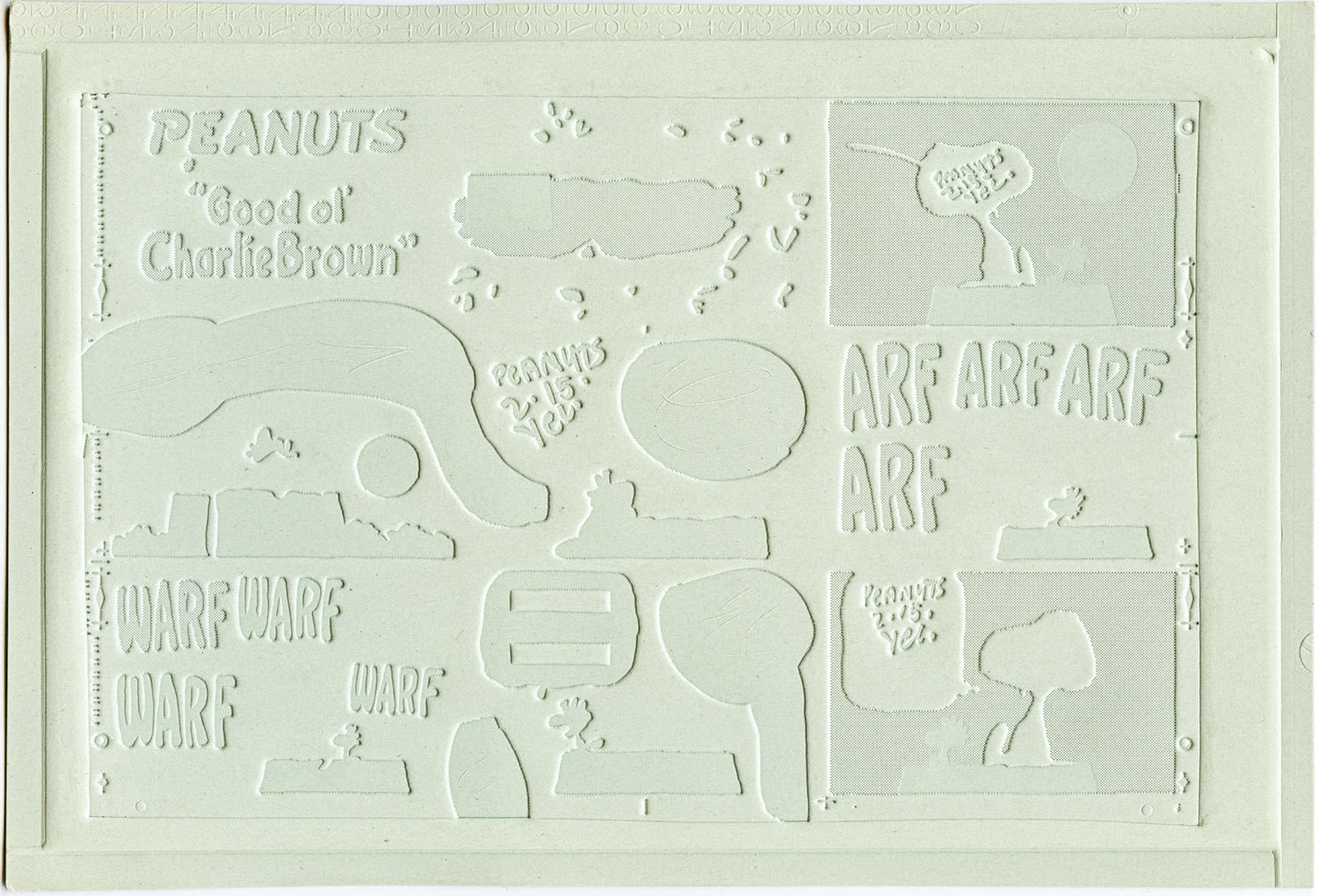
A single yellow-plate flong for a Sunday Peanuts comic, showing Snoopy and other characters in raised relief
Yellow plate in flong (mold) form of a four-color Sunday Peanuts comic from the 1970s
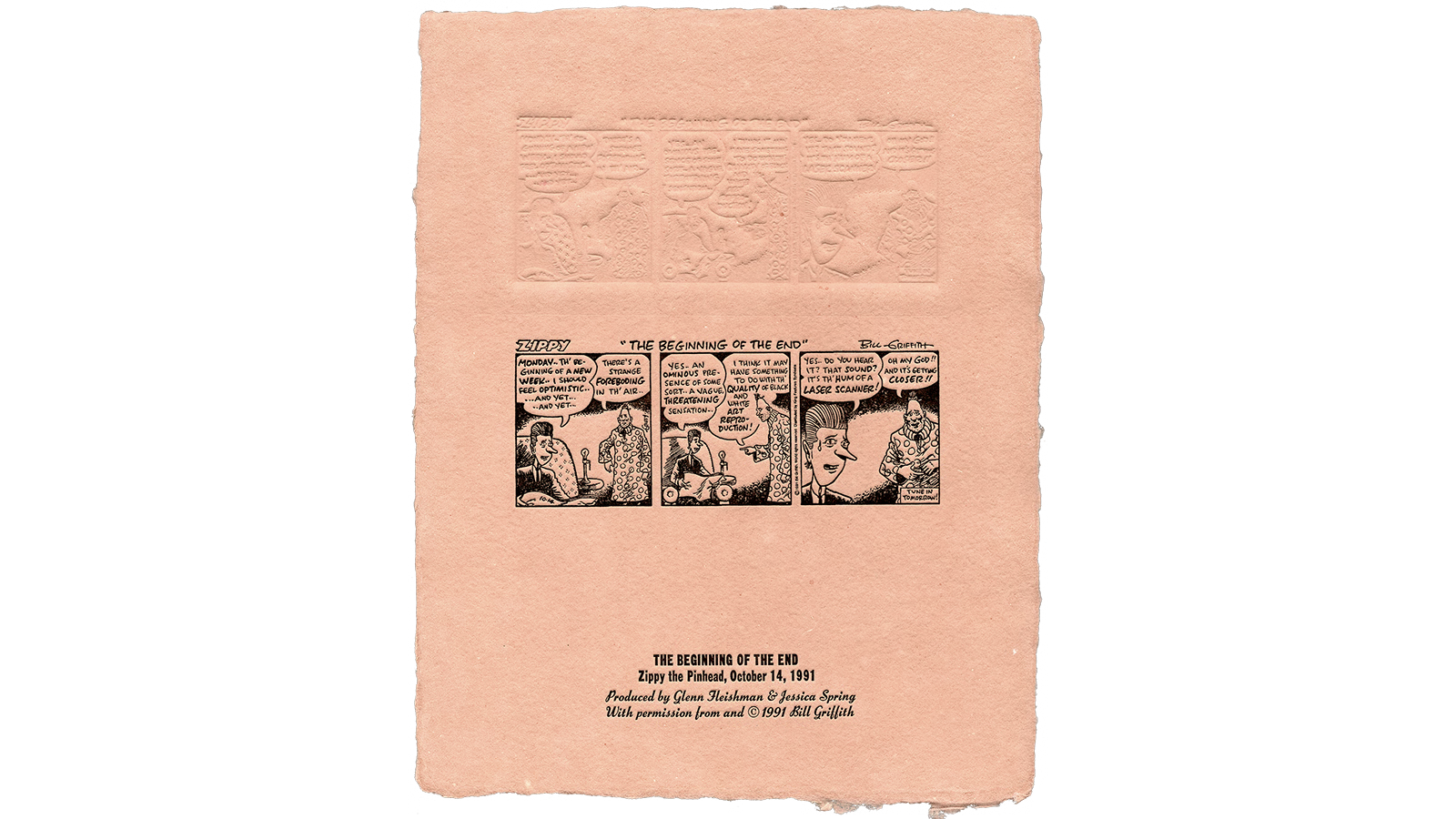
A Zippy the Pinhead flong re-creation on handmade paper with letterpress printing

About Glenn

One of the last people trained to become a typesetter in the 1980s, I studied graphic design in college and worked on the weekly paper. Throughout my writing, design, and production career, I’ve intertwined type, printing, and explanation, including writing dozens of computer how-to books and thousands of Macworld magazine columns.

I began to write extensively about printing history in 2017 and have created many books and projects since, all funded through Kickstarter, including The Tiny Type Museum and Time Capsule (2019–2022), How Comics Were Made (2024), Six Centuries of Type & Printing (2019, 2025), and London Kerning (2019). (How Comics Were Made appeared in a second edition in 2025 as How Comics Are Made.)

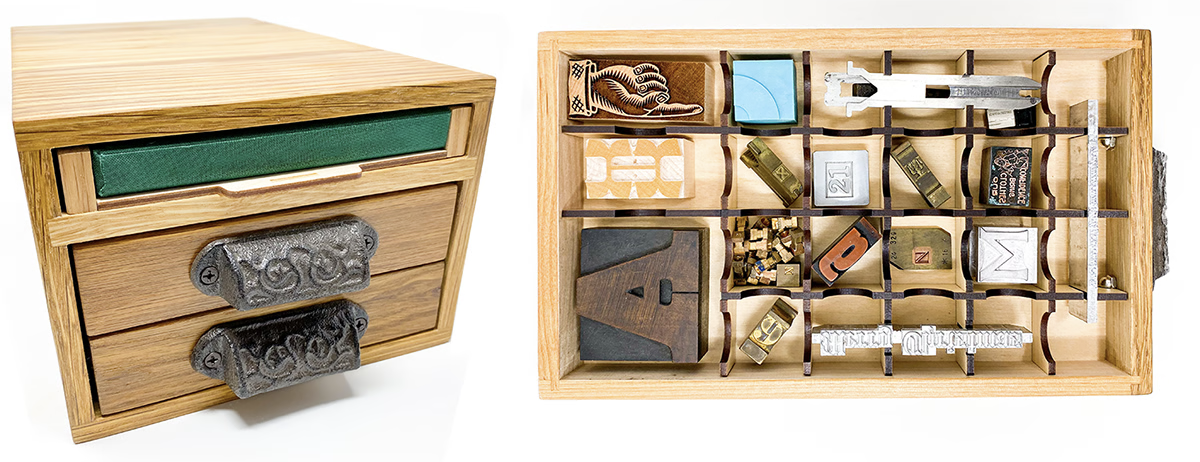
The Tiny Type Museum and Time Capsule: a wooden cabinet with drawers containing historic and newly created printing and type artifacts
The Tiny Type Museum & Time Capsule collected centuries of historic and newly created printing and type artifacts into a single case.

My current line of work is researching and writing about printing history, writing a regular column and occasional features for Six Colors, acting as Executive Editor at Take Control Books (a line of how-to ebooks on mostly Apple-related topics), and writing a monthly newsletter, True to Glenn’s Type. I help authors produce books, too, and project managed Shift Happens for Marcin Wichary, and Our Long National Nightmare for Tom Tomorrow (Dan Perkins).

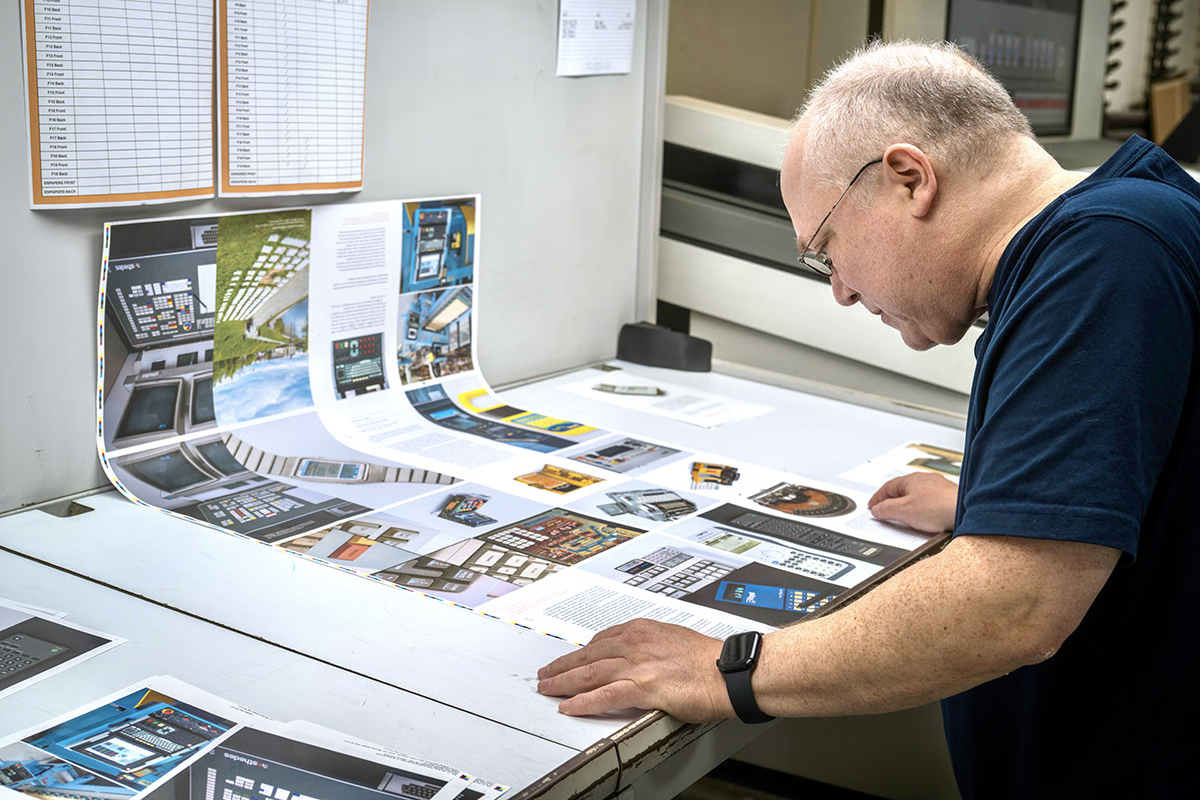
Glenn Fleishman examining printed sheets of Shift Happens on a printing press in Lewiston, Maine
Glenn Fleishman on press with “Shift Happens,” 2023, in Lewiston, Maine (photo: Marcin Wichary)

Help bring this book to life

Back Flong Time, No See on Kickstarter and bring these forgotten stories of printing into the world.

Back This Project on Kickstarter